
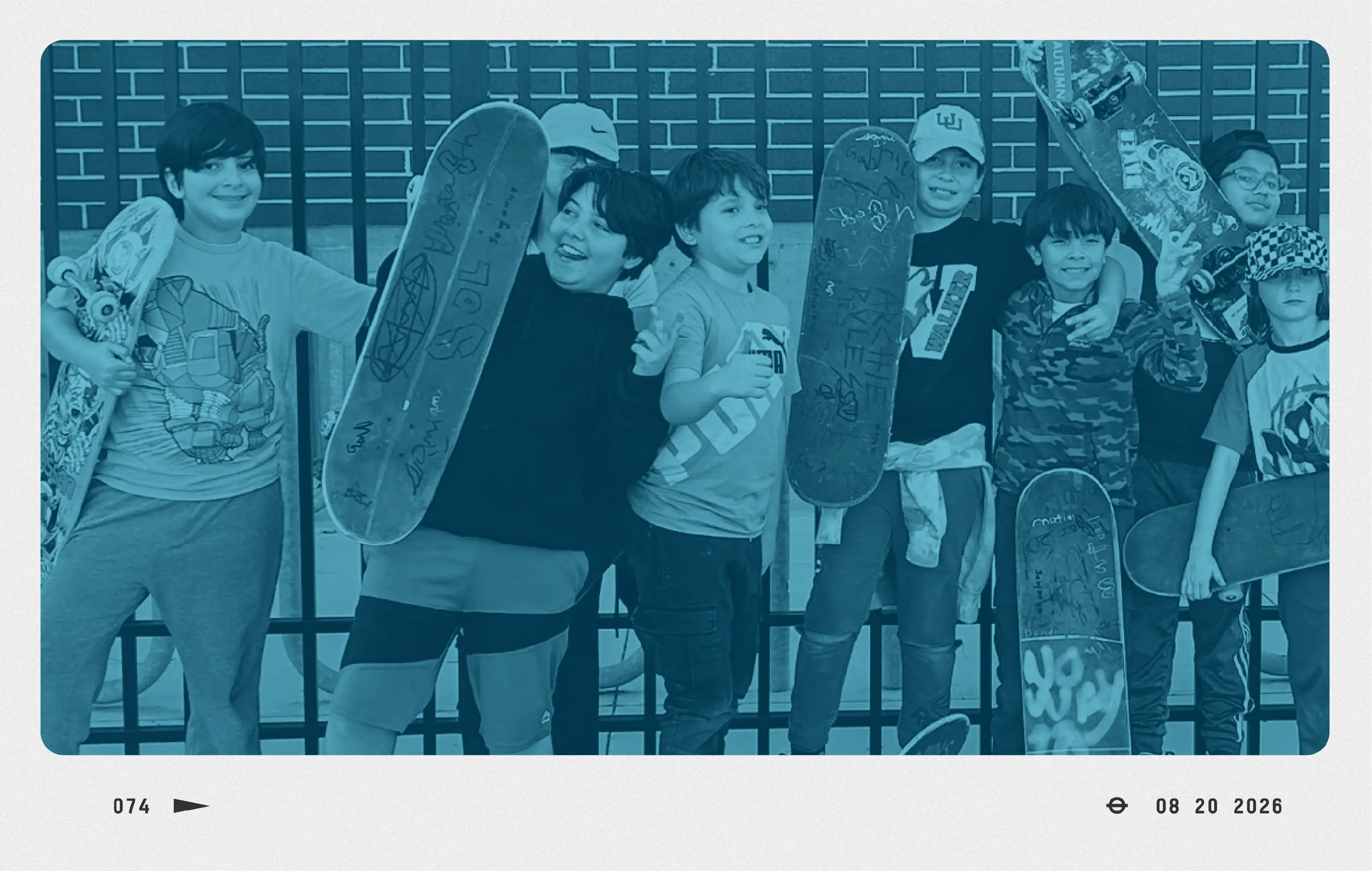
Sports aren’t just a hobby or a way to fill time. They teach kids (and adults!) to test their own limits. To know when to push through and when to pause. They can even help build confidence.
While not everyone has access to sports and the benefits they provide, that’s exactly why Pushing Ahead (a nonprofit based in Salt Lake City) exists. Co-founder Derek Robison picked up a skateboard at the age of ten and has seen benefits from it ever since. We got the chance to sit down with him to talk about his own experience on the board, and how it inspired the work he does with Pushing Ahead.

Tell us about Pushing Ahead!
Pushing Ahead is a 501(c)(3) that brings skateboarding to youth who might not otherwise have access to it through partnerships with groups like the Boys & Girls Club, Promise South Salt Lake, and the University of Utah's Hartland Center. It started when I was working at the Boys & Girls Club. I noticed there were a lot of kids who were genuinely interested in skateboarding but just couldn't afford to get into it. That's where the idea came from: collect donations from local skate shops and use them to give kids access who otherwise couldn't afford it. Beyond just handing someone a board, though, the real goal was passing along everything skateboarding gave me—the physical benefits, but just as much the mental ones: confidence, resilience, and community.
Why did skateboarding feel like the right way to make a difference? Why skateboarding instead of another sport or activity?
It was a natural path for me. There wasn't anything like this in Utah. But it was also personal. Skateboarding gave me the freedom to explore and learn at my own pace. I was never a team sports kid. I was shy, and team sports never clicked for me the way skateboarding did. Skating was a creative outlet, not a competition, and that's what made it feel like the right vehicle for change.
What does skateboarding give kids that you've never seen another activity provide?
It gives kids a creative outlet, a community, and a sense of individualism all at once. There aren't a lot of rigid rules in skateboarding, so kids get to define what it means to them. I've watched complete strangers become friends over nothing more than a piece of wood. It's an instant connection into a creative world that everyone sees differently, and being part of it changes how you see the world in general. It builds independence, but it also builds this shared thing where you're genuinely cheering on someone else landing their trick, even if you've never met them before.

What's something you've seen happen at the skatepark that simply wouldn't happen anywhere else?
Strangers becoming friends over a shared piece of wood, connecting instantly because they're both chasing the same feeling of landing the trick you're battling. And that instinct to cheer for someone else's win, even a total stranger's, the way people do at a skatepark. I don't see that show up the same way in a lot of other settings.
What's the best example you've seen of the skate community showing up for someone?
Several years ago a skateboarder got a head injury at one of our competitions. We put up a gofundme to raise money to help with the medical bills and time off work. The local skateboard community nearly raised $6000 for this skater. It seemed to have made an impact for that skater.
What's the biggest misconception people have about skateboarding?
Growing up, people viewed skateboarders as outcasts—alternative, into drugs and drinking, degenerates, always getting into trouble. That perception still exists a little, but it's a lot less true than it used to be. Now more than ever, skateboarders take things like nutrition and physical fitness seriously, because they want longevity in the sport.
Can you think of a student who surprised themselves by doing something they never thought they could?
Yes! There was an individual that had fallen after trying to grind the rail. They had shut down and didn’t want to do anything. I knew that they were so close and that if they kept trying, they would get it soon. Sure enough, after much persuasion they got up and tried again and BOOM they landed it!
Has there ever been a moment where you realized your work had become about more than skateboarding?
A few years into starting Pushing Ahead we were doing a skateboard program with a group of refugee youth. Most of them hardly spoke English. Skateboarding was the best way we could communicate because it was through action. They could see where we put our feet and what we did to help us balance. It was cool to see them pick up on it even if language was a barrier. The next week even more kids showed up because the other kids had told their friends/neighbors about it. For them it was something they had never seen before.

What's something the kids you teach have taught you?
They teach me just to continue to have passion for skateboarding. They get so stoked on the smallest things. I’ve been doing it for so long that it’s helped me to step back and remember the small moments and the big moments.
Have you ever had a skate session where dehydration caught you completely off guard?
YES A LOT! I used to drink so much water and struggled to feel hydrated. I can think of several experiences when I was cooked because of how exhausted I felt only in my body and not in my legs or anything. There is nothing more of a bummer than when you’ve got more in the tank but you're dehydrated and can’t go on. It wasn’t until I learned about electrolytes that my hydration made a huge improvement.
What surprises people the most about how physically demanding skateboarding really is?
So many people think that the tricks people do are easy and don’t take much practice to achieve. However, tricks can take so long. I’ve been skating for 20+ years and sometimes certain tricks just take a while to get and even after you land them you gotta keep at them or you lose them.
What's one thing you wish someone had taught you about staying fueled and hydrated when you first started skating?
I just wish someone would have talked about it in general. I can think of so many skate sessions where I came home and was just dead the rest of the day because of how dehydrated I was. Now I'm not as impacted when I'm done skateboarding or doing any type of physical activity.
What do you do to make sure you're still feeling good by the end of a long session?
Haha well drinking SALTT. I’ve used SALTT for over a year now and am stoked on how the taste and benefits have been great for me. Also, eating some good snacks and having proper meals has been a huge benefit.
You’ve shared that this is a part time job for you that you do on top of being a social worker/therapist full time. What do your long days teach you about taking care of yourself so you can keep showing up?
Self-care is something that I take very seriously because of my profession. I definitely do additional things like spending time outside, hiking, running, chilling with family and friends, skateboarding, and snowboarding. Also, doing creative projects is a fun way for me to express myself. I try not to take on too much and have a balance between work and play.

Share:
DEEP DIVE - SALTT Drink Mix and Heavy Metals