
We tested SALTT Electrolyte Drink Mix Powder for heavy metals - all tested samples passed and comply with California Proposition 65. When properly mixed with water, SALTT also complies with the strict US FDA proposed "Action Levels" for Arsenic in drinking water of under 10 parts per billion.
Please note that, in addition to testing for heavy metals, we have also tested SALTT for PFAS/Teflon "forever chemicals," Glyphosate/Round-Up, Mycotoxins, BPA, and other contaminants. Full test results are available here.
If you want more details on concentration, parts per billion, and FDA "Action Level" water quality standards for arsenic; check out the "Deep Dive" version of this blog post - we're going to try to keep this one shorter.
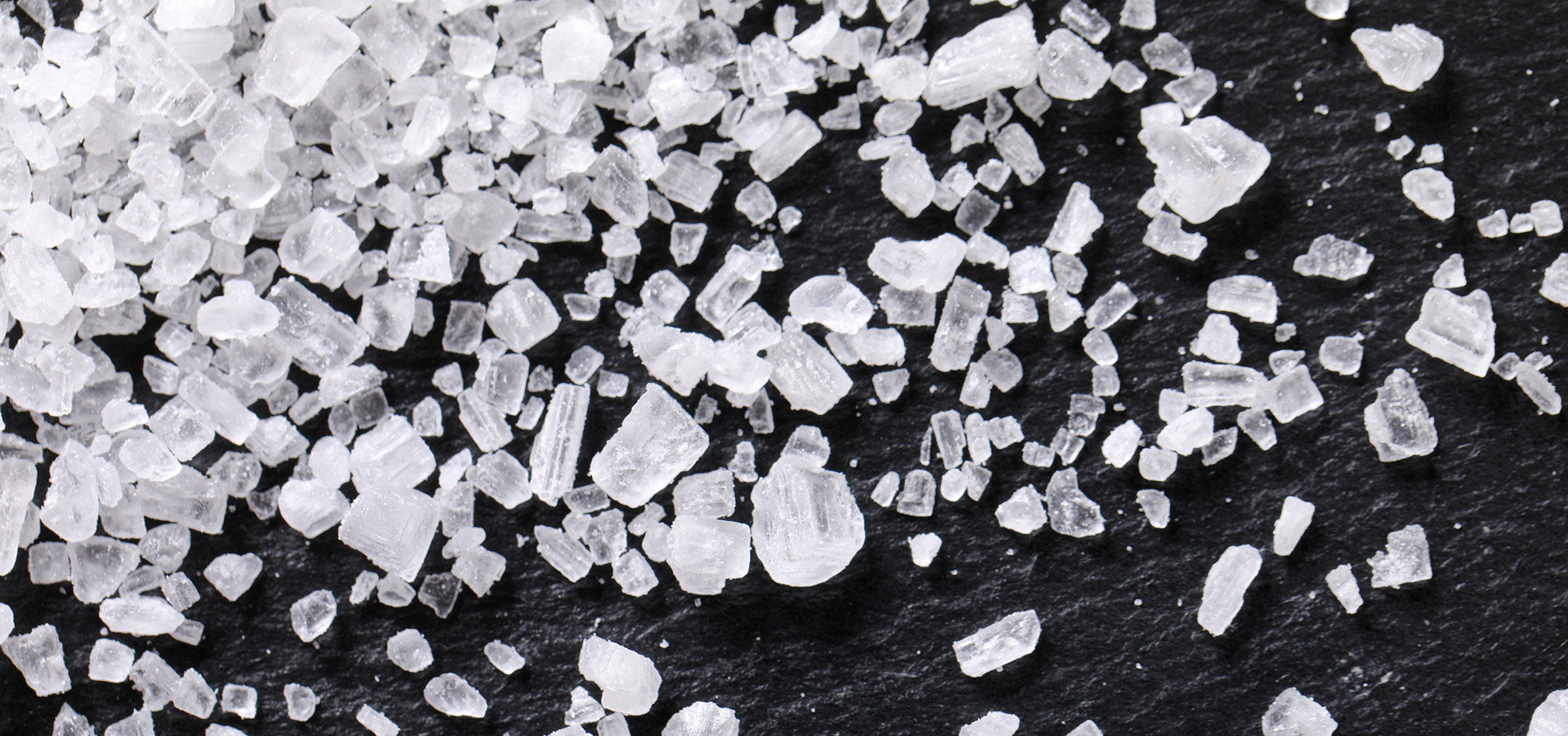
The salt we use in SALTT is pretty cool stuff - it's quite rich in trace minerals, especially magnesium, to the extent that SALTT has more magnesium than most other electrolytes and we're not even adding magnesium! One concern that we've been asked is: do those trace minerals include heavy metals like lead? To answer this, we have done a number of extremely sensitive tests that can detect as little as 1 part per billion (0.0000001%).
Just for fun, here's what 1 ppb equates to: a US Nickel happens to weigh exactly 5 grams. If you had 5 MILLION kilograms (just over 11 million pounds or exactly the water weight in two Olympic-size swimming pools) that 5g nickel would be 1 part per billion. A 5g us Nickle also weighs 5 million micro grams.
Because the tests we have done are so sensitive, and we're testing the concentrated dry salt, the results show small levels of lead and arsenic in all of the samples tested. None of the samples tested had any detectible level of mercury and only the Cocoa Loco (chocolate) had any measured level of cadmium. The average concentration of lead in the dry SALTT powder is 23 ppb. For context, in this 2021 study, it shows the level of lead in raisins was 47 ppb (source in table 6), and celery to be 27 ppb (source in table 7). It should again be noted that the concentration levels we found for SALTT are the dry powder only - when mixed with 1 liter of water (around 32 oz) the concentration of Lead drops to 0.023 ppb and the concentration for Arsenic drops to a maximum of 3.39 ppb (the standard for drinking water is to be under 10.0 ppb).
The Test Results
These figures have been converted from concentration in the dry powder into total amount so that you can compare them to California Proposition 65 maximum targets. The raw concentration figures for the dry powder are in the linked test results.
| Flavor | Arsenic (μg) | Cadmium (μg) | Mercury (μg) | Lead (μg) |
| Groovy Grapefruit | 3.42 | Not Detected | Not Detected | 0.077 |
| Clean Slate | 3.06 | Not Detected | Not Detected | 0.065 |
| Cherry Chill | 2.69 | Not Detected | Not Detected | 0.145 |
| Lemon Lime Twist | 3.29 | Not Detected | Not Detected | 0.204 |
| Blue Slushies | 3.15 | 0.00045 | Not Detected | 0.063 |
| Cocoa Loco | 3.13 | 0.34346 | Not Detected | 0.148 |
| Mondo Melon | 3.27 | Not Detected | Not Detected | 0.138 |
| Feelin' Peachy | 3.00 | Not Detected | Not Detected | 0.210 |
| Prop 65 Target | (under 10 μg) | (under 4.1 μg) | (under 0.3 μg) | (under 0.500 μg) |
The original lab reports for each flavor are linked above. As noted previously - all of the samples tested are below the California Proposition 65 "OEHHA Safe Harbor Levels" listed below and consequently do not need to have a Prop 65 warning.
- Arsenic: 10 (μg/day) No Significant Risk Levels (NSRL) for cancer-causing chemicals. Defined as the daily dose level that causes no more than one excess case of cancer in 100,000 individuals exposed over a 70-year lifetime.
- Cadmium: 4.1 (μg/day) Maximum Allowable Dose Levels (MADL) for chemicals causing reproductive toxicity
- Mercury: 0.3 (μg/day) Maximum Allowable Dose Levels (MADL) for chemicals causing reproductive toxicity
- Lead: 15 (μg/day) No Significant Risk Levels (NSRL) for cancer-causing chemicals
- Lead: 0.5 (μg/day) Maximum Allowable Dose Levels (MADL) for chemicals causing reproductive toxicity. This is 1/1000 the "no observable effect level" of 500 μg to "provide an ample margin of safety"
Where we get our SALT... T
One interesting question becomes: why are the total levels of heavy metals in SALTT so low? The water quality report for our office shows a concentration of 1.2 ppb lead and 99 ppb sodium in the local drinking water, shouldn't a concentrated salt have WAY higher numbers?

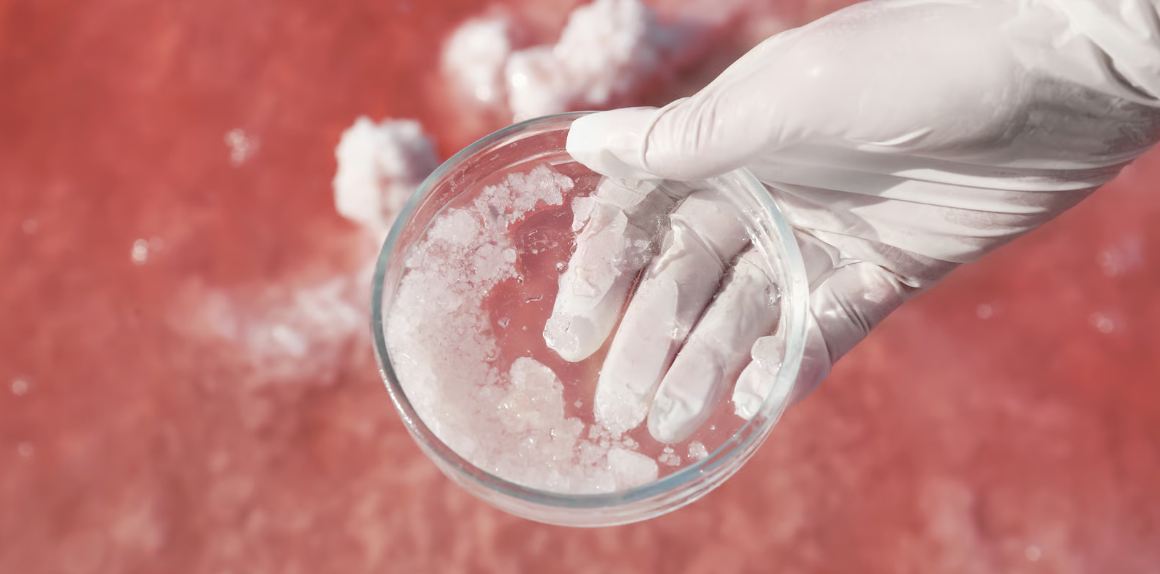
The salt that we are using comes from the North arm of the Great Salt Lake which has some unique properties, even for the Great Salt Lake. The causeway that splits the lake makes the North section have a far higher concentration of minerals, it's also what amounts to a giant settling pond that allows any heavy elements to sink (which is why the potential for the lake drying and exposing the lake bottom is a very bad thing). Because of the way the brine is harvested, we're not getting a high concentration of heavier elements, only the lighter ones.
The high amount of salt in the North section of the lake is actually a problem for the lake and is one of the reasons our salt is harvested from that area instead of the much closer South part. The amount of salt we are removing out of the North section can only be a good thing.
If you want more details on concentration, parts per billion, and FDA "Action Level" water quality standards for arsenic; check out the "Deep Dive" version of this blog post.


Share:
Health and Hydration While Skating
Top flavors for SALTT Electrolyte Drink Mix - Leaderboard May 2026