
The Origin and Surf Tales of Ian Scott, Founder of IPS Surf
There's a moment that happens right before you jump in the water, your brain becomes a complete coward. "It's too cold.", "Maybe tomorrow.", "You're probably going to eat it anyway." But then you jump in. Five minutes later you're wondering why you almost talked yourself out of one of the best experiences of your summer. Ian Scott has watched that conversation play out hundreds of times over the years.
Ian grew up in Maine. His family lived on the water. His mom and uncles were lifelong water skiers. His dad made sure there was always another chance to ride behind the boat. At five years old he climbed onto a wakeboard for the first time. He still remembers the cold water. The awkward stance. The bumps behind the boat. And mostly, listening to everyone yelling instructions while hoping he'd somehow figure it out. He did.
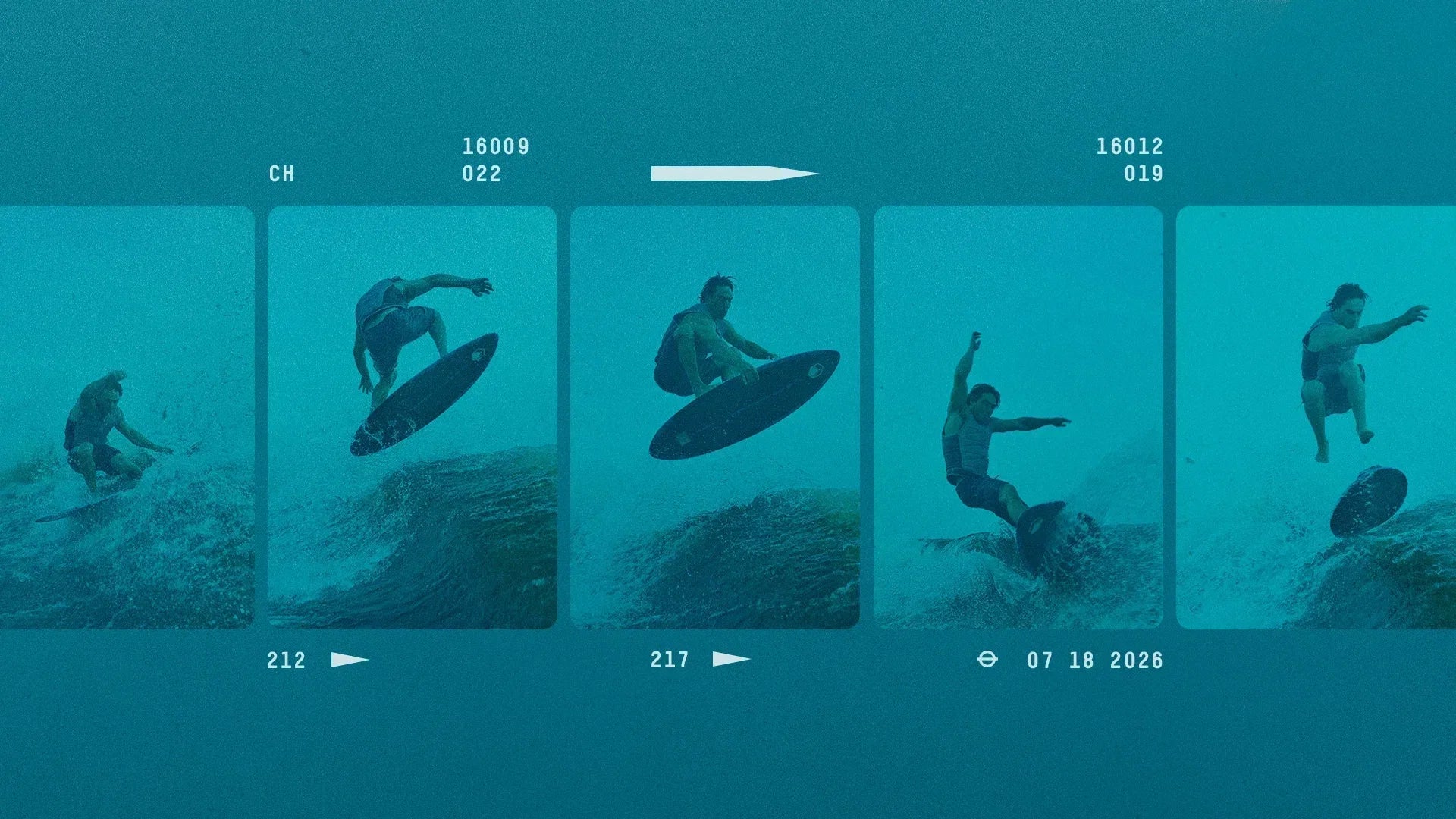
As wake surfing exploded in the early 2010s, Ian grew with it. Back before purpose-built surf boats existed, he and his friends were stuffing ballast bags into wakeboard boats and driving circles trying to shape a clean wave that could generate enough push. One friend, Jake Caster, became a constant riding partner. The two spent countless hours towing each other, learning tricks, and slowly figuring things out together. "We spent so much time falling," Ian laughs. "Which, as it turns out, is a pretty effective way to learn anything." Jake went on to make a name for himself by “landing some groundbreaking tricks that blew up the whole industry.” Ian went another direction—helping others stand up for the very first time.
The Moment That Never Gets Old
Long before IPS Surf existed, fifteen-year-old Ian was already teaching. A local surf shop paid him a few bucks to sit on the back of the boat during evening surf sessions and coach beginners. Later, becoming a PADI scuba instructor completely changed how he thought about teaching. Scuba instruction isn't about yelling louder. It's about understanding people. Breaking difficult movements into small wins. Finding the right words. Meeting someone exactly where they are. That's still how Ian coaches today. Every lesson starts with the same thing. Communication.
He spends the first few minutes explaining body position, calming nerves, and helping people realize they don't have to be perfect. Because everyone is nervous. "I tell people the truth, especially to kids. I love being real with kids–talking to them like they’re straight up adults," Ian says. "Yeah... I agree. It's cold. It’s going to be awkward. You're probably going to get water up your nose. It's uncomfortable...but it's worthwhile. So, I try to just be real with people and I think they connect with that and they’re like, ‘All right, this dude’s not bullshitting me.’ Then it’s all cool from there.” Then comes his favorite part, “the glow.”
“I think the most rewarding thing for me is seeing that glow in someone's eyes when it finally clicks. Whether it's throwing the rope and surfing for the first time, or just getting up on two skis for the first time, their face just lights up. They're like, ‘I didn't think I was going to do this...and I'm doing it!’."
“Then afterward, they look you in the eye and they say, ‘Thank you!’ and you're like, ‘Yeah, I got you!’ and then I’m stoked that they felt that…it feels good! It's real. And I knew they could do it, you know? And then you have that moment with them where you're like, I believe in you. Believe in yourself. You did that!" Nobody forgets the first time someone gets up. Those are the moments Ian remembers most. Not perfect tricks. Not competitions. Those memories are why people come back to the water.
Making the Water Accessible to Everyone
That belief—that everyone deserves these moments—is why IPS Surf works closely with Cornell Orthotics & Prosthetics. Ian's uncles founded the company, designing prosthetic limbs and orthotic devices. Growing up around adaptive technology changed how Ian looked at coaching. Instead of asking whether someone can wake surf., he asks, "How do we make this work?" Sometimes it's a different board. Sometimes it's changing speed. Sometimes it's taking smaller steps. He remembers helping a blind surfer learn to ride by talking him through the feel of the wave. Another student had limited ankle mobility, so Ian experimented with different board shapes until they found one that naturally rolled into position. Eventually, he throws the rope. Just like everyone else. "There's always a way to adapt." That's the point. The goal isn't creating elite surfers. It's removing barriers so more people get to experience that feeling.
Water Alone Doesn't Cut It
Ask Ian what's most physically demanding and he won’t say just the surfing part. It's spending all day on the boat. His day starts before sunrise. Usually with his own session. Then twelve-plus hours on the boat—standing in full sun. Headaches become a pretty reliable reminder that hydration isn't optional. "Water alone doesn't always cut it." His routine is simple. A liter of water in the morning. A liter of water with SALTT midday. Another liter in the afternoon. "I can actually feel the difference," he says. "Everything just resets, it’s what lubricates me and brings me back." Ocean surfing raises the stakes even more. Unlike the lake, once you're paddled out, you're committed. Four-hour sessions aren't uncommon. "You can only drink so much water before you go out. But drinking a SALTT before surfing is almost like drinking three waters. And if I screw up and forget, my body is just in absolute agony.”
The Best Wave Wasn't Really About the Wave
When asked about his favorite ocean surf memory…well, he says it best in his own words:
"So we were in Bali and took our motorbikes across Lombok, which is the neighboring island, and then over to West Sumbawa, it’s home to one of the most insane waves. It literally barrels—there are four barrel sections—and it barrels on this reef for like a minute and a half. It just freight-train reels down this reef.
"So I'm a bit scared. I'm like, Am I gonna die? What do I do? I'm buying a helmet! I'm tripping out. Am I ready for this? Am I stupid?"
"Then my buddy was getting me hyped. He had just come from Hawaii, and he had this great mindset that he came with. He'd been surrounded by a couple people who had been giving him all these different things to think about—manifestation, anything's possible, all of that. He brought this awesome energy that I really needed as we’re sitting there, doing our little yoga poses and stuff.
"We bought a couple boards for the trip, motorbiked out there, and had an awesome session. The waves were cooking. It was pumping. We got ourselves into a few. It was scary. Like, it was proper out there. We were just sitting on the shoulder, hoping to get just a little part of the action. We certainly weren't going for the biggest ones.
"The waves we caught were unreal. It was some of the best surfing I've ever had. But what was really fun was the mission that took us there, and just those nights we spent sitting there, listening to music under the moonlight, and the connection that we had together.
"That's really what surfing is about, and that's why I love it so much. You find people who share that common connection with you, and then you just dive deep into it. Yeah, there's a bit of survival to it. There's a bit of fear. There's a bit of realness. You're out there. It's fun, man. That's why I love it.”
Rapid Fire Round
Talking with Ian, you realize pretty quickly that none of this is really about surfing. It's about saying yes before your brain talks you out of it. It's about the people who drag you out of bed before sunrise, the friends who hype you up when you're scared, and the strangers who somehow become part of your story by the end of the day. The waves are just where it all happens.
Before we wrapped up, I threw a few rapid-fire questions Ian's way.
Favorite place to surf? Lakey Peak, Indonesia.
Favorite place to wakesurf? Long Lake, Maine.
Morning or sunset session? Morning. Every time.
Boat playlist or silence? Crank the speakers.
Favorite post-session meal? Steak and rice. Or chicken and rice. Heavy protein.
One piece of advice for new riders? Stay low. Keep your arms straight. Have patience.
Favorite SALTT flavor? Cocoa Loco.
Three words that describe IPS Surf? Grounded. Real. Fun.
One thing everyone should do this summer? Get outside. Get wet doing something. Go kayak. Go canoeing. Jump off a cliff. Do something with people you love. There's something about getting in the water that just lights us up.
To catch a session on the lake with Ian, email him at ipssurfmaine@gmail.com or visit ipssurf.com

Bonus: Ian's Recovery Ritual
When it comes to recovery for Ian, it's surprisingly low-key. A ton of water, a bunch of clean food high in protein, and then relaxation and time to decompress. “Sometimes I’ll lay on the floor, like fully laying down flat on the floor in the ‘dead man's pose’. I wish I could tell you that I do yoga after I surf, because that would be great, but I’m just too beat. So, yeah, I just do the dead man’s pose,” Ian laughs. And while lying dead on the floor he’s resuscitated by episodes of surf podcasts like “The Jamie O & Mason Ho Show.” Before long, he's packing for the next day on the water. And after years of traveling and guiding, there are a few things that never leave his bags.
Ian's Boat Bag Must-Haves:
On the boat, Ian keeps things pretty simple, but every item has a purpose. His number one essential is a Hyperflex jacket made from wetsuit material. "You can throw it over your life jacket, soaking wet, and within seconds your body just heats up." It's his go-to for cold mornings, late-season sessions, or whenever the weather turns.
The rest of his bag is all about staying prepared. A portable charger keeps his phone alive during long charter days, and there's always a pack or two of SALTT on board. "I always keep SALTT on the boat. I'll drink any flavor." A hat, a good pair of sunglasses, and a good mineral-based zinc (his favorite is Avisol) are also a must.
At the end of the day it comes down to a few essentials: "Something to keep warm just in case shit hits the fan, electrolytes and water, a portable charger, and protection from the sun. That's pretty much it."
Share:
Busting Utah Hydration Myths
Nobody Owns the Game of Golf